
Day two of the 2009 Davis Cup final: Spain vs. The Czech Republic.
Posted by miri On 10 February, 2010
Day two of the 2009 Davis Cup final: Spain vs. The Czech Republic.
Posted by miri On 9 February, 2010

Day two of the 2009 Davis Cup final: Spain vs. The Czech Republic.
Posted by miri On 8 February, 2010

Day two of the 2009 Davis Cup final: Spain vs. The Czech Republic.
Posted by miri On 7 February, 2010
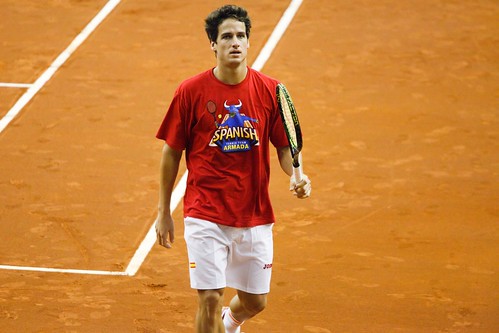
Day two of the 2009 Davis Cup final: Spain vs. The Czech Republic.
Posted by miri On 7 February, 2010

Day three of the 2009 Davis Cup final: Spain vs. The Czech Republic.
Posted by miri On 6 February, 2010
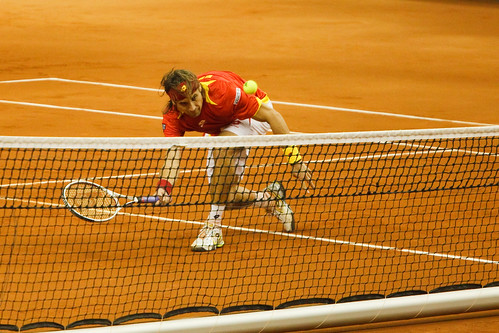
Day one of the 2009 Davis Cup final: Spain vs. The Czech Republic.
Posted by miri On 5 February, 2010
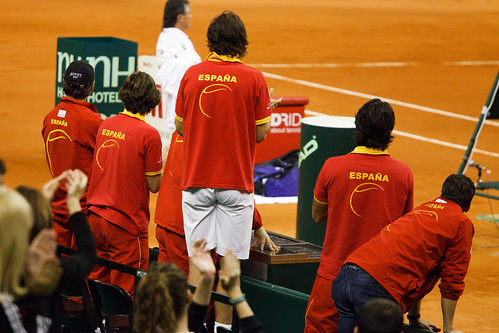
Day one of the 2009 Davis Cup final: Spain vs. The Czech Republic.
Posted by miri On 4 February, 2010
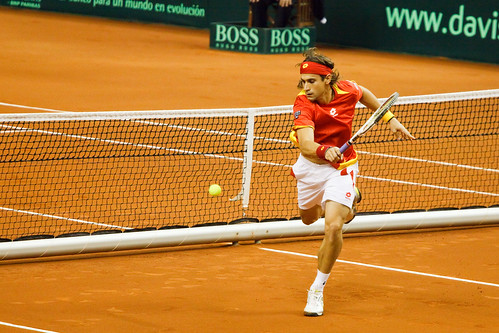
Day one of the 2009 Davis Cup final: Spain vs. The Czech Republic.
Posted by miri On 3 February, 2010

Day one of the 2009 Davis Cup final: Spain vs. The Czech Republic.
Posted by miri On 2 February, 2010
Fascinating story from the NY Times.
When they learned that their mother’s cells had saved lives, the family felt proud. But they also felt confused, a bit frightened, used and abused. It had never occurred to anyone to ask permission to take their mother’s tissue, tell them that her cells had changed scientific history or even to say thank you. And certainly no one had ever suggested that they deserved a share of the profits.
Some of the Lackses later gave blood to Hopkins researchers, thinking they were being tested for cancer, when really the scientists wanted their genetic information to help determine whether HeLa cells were contaminating other cultures. When Ms. Pullum-Lacks asked a renowned geneticist at the hospital, Victor McKusick, about her mother’s illness and the use of her cells, he gave her an autographed copy of an impenetrable textbook he had edited, and, Ms. Skloot writes, “beneath his signature, he wrote a phone number for Deborah to use for making appointments to give more blood.â€
The bounds of fairness, respect and simple courtesy all seem to have been breached in the case of the Lacks family. The gulf between them and the scientists — race, class, education — was enormous and made communication difficult.